
Re-entering the romantic world later in life offers a profound opportunity for deep connection, but only if you protect your peace of mind by identifying toxic behavior early. Ignoring relationship warning signs now carries a much higher cost than it did in your twenties, especially when your financial security and emotional health are on the line. Navigating mature dating requires distinguishing between harmless personality quirks and genuine threats to your well-being. Whether you are using apps for the first time or meeting people locally, learning to spot subtle early indicators prevents heartbreak. By recognizing these seven destructive patterns, you empower yourself to walk away from incompatible matches and create space for the authentic partnership you actually deserve.

They Rush Intimacy and Attempt to Isolate You Early On
When you begin dating again, experiencing an immediate, intense spark can feel incredibly validating—almost like a scene from a romantic movie. However, individuals with toxic motives often weaponize this feeling through a manipulative tactic known as love bombing. They flood your nervous system with dopamine by showering you with excessive praise, declaring their profound love within mere days, and insisting that you are soulmates destined to be together. While this attention feels highly flattering on the surface, it is strategically designed to bypass your natural boundaries and establish control before you have time to objectively evaluate their character.
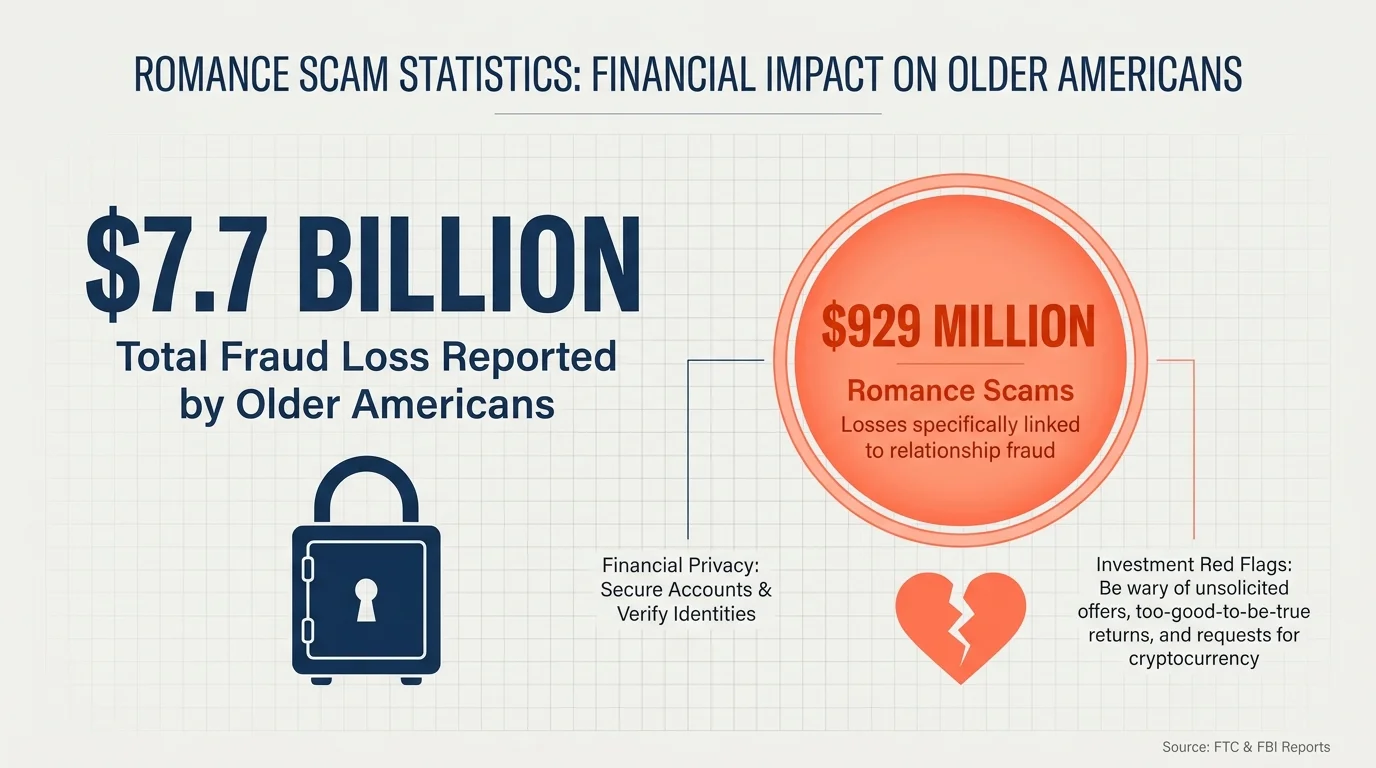
This manufactured urgency is particularly dangerous in the digital dating landscape. According to the FBI’s Internet Crime Complaint Center, older Americans reported losing an astonishing $7.7 billion to fraud in a single year, with romance scams alone accounting for $929 million in devastating financial losses. Fraudsters and abusers alike rely on accelerated intimacy to make you feel dependent on their validation.
You can spot this red flag by observing how they react when you attempt to maintain your normal routine. If a new match becomes noticeably irritable when you spend an afternoon with your grandchildren or take a few hours to return a text message, they are revealing a deep-seated desire to isolate you from your support network. A genuinely healthy partner understands that you have an established, fulfilling life; they will encourage you to maintain those bonds rather than viewing your independence as a threat to the relationship.
Their Financial Boundaries Are Dangerously Blurry
By the time you reach your fifties, you have likely spent decades building your financial security, nurturing your retirement accounts, and acquiring assets. Consequently, your nest egg requires strict protection. Ignoring financial red flags is one of the most catastrophic dating mistakes you can make at this stage of life. A healthy, respectful partner values your financial privacy and expects to maintain mutual financial independence, especially in the early phases of courtship.
Conversely, a toxic match or a sophisticated scammer will casually but consistently probe your resources. Pay close attention to the questions they ask during your first few dates. Do they press for specifics about your property ownership, your neighborhood, or the balances of your investment accounts? Do they frequently hint at temporary cash flow problems, perhaps mentioning a frozen bank account or an emergency car repair, silently hoping you will volunteer to cover the difference? In modern dating, scammers also build deep emotional trust over several months before casually introducing a highly exclusive cryptocurrency investment opportunity.
To protect yourself, establish firm financial boundaries from day one. Keep the conversation entirely away from your specific net worth. If someone you have only known for a few weeks asks you for a short-term loan, suggests moving your money into an unfamiliar trading platform, or expects you to single-handedly fund an extravagant lifestyle, walk away immediately. Authentic love does not require a financial buy-in.
They Display Constant Contempt Disguised as Humor
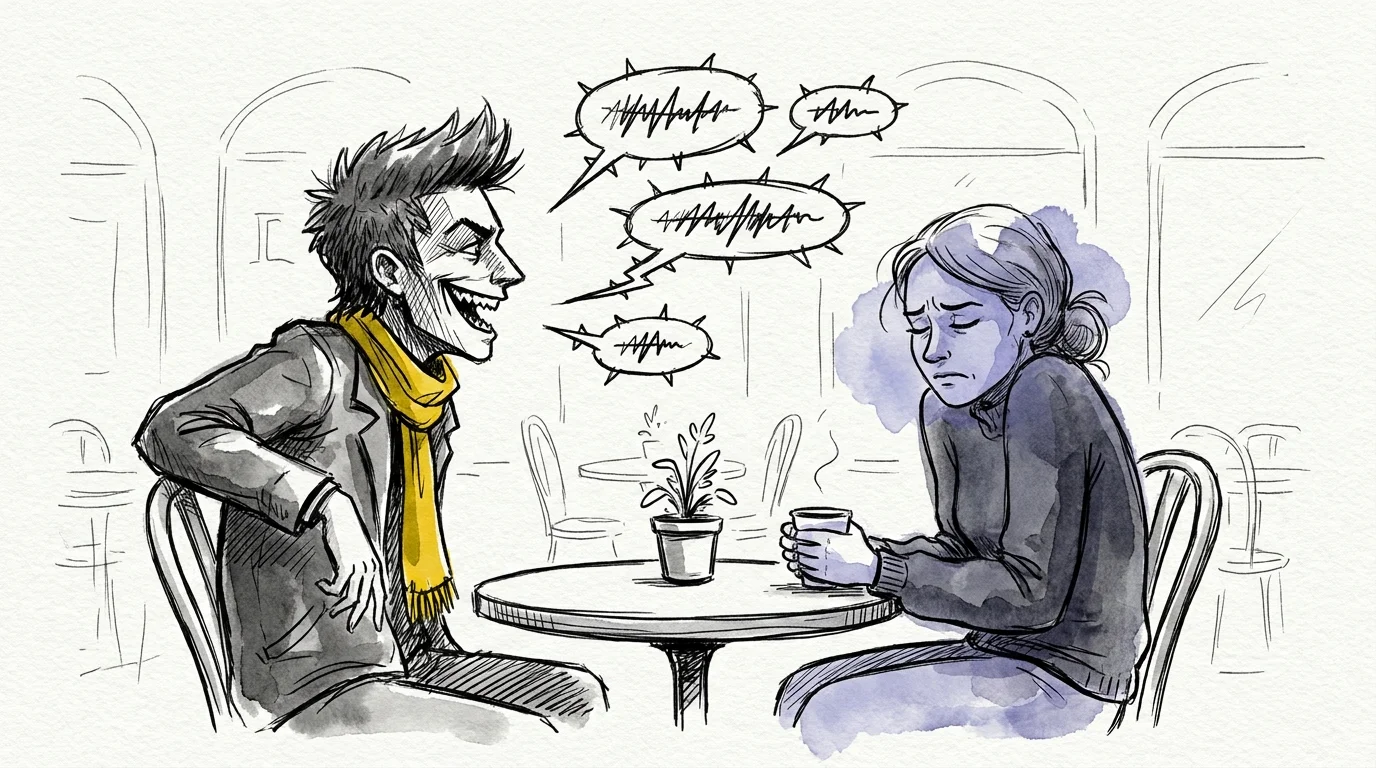
When evaluating a potential partner, analyzing their communication style reveals exactly how they will handle stress and vulnerability in the future. Research from the Gottman Institute identifies a set of destructive communication patterns, famously known as the “Four Horsemen,” which predict relationship failure with startling accuracy. Among these behavioral markers, contempt is the most toxic element you can introduce into a romantic dynamic. Contempt goes far beyond simple criticism; it is an attitude of deep superiority that manifests as eye-rolling, mockery, hostile sarcasm, and name-calling.
In mature dating, contempt rarely shows up as outright cruelty on the first date; instead, it masquerades as harmless, playful teasing. Your date might make a cutting, passive-aggressive remark about your physical aging, your fashion sense, or your career achievements. When you express hurt or discomfort, they quickly pivot, claiming, “I am just joking around; you are entirely too sensitive.” This gaslighting tactic is a calculated method of chipping away at your self-esteem while entirely dodging accountability.
Imagine sharing a personal story about a passionate hobby you took up after retiring—perhaps painting or gardening. Instead of showing genuine curiosity, your date rolls their eyes and dismisses it as a trivial waste of time. Over months and years, this psychological friction physically breaks down your body, increasing your stress hormones and destroying your sense of emotional safety. You deserve a partner who celebrates your joy and speaks to you with unwavering respect, even during moments of disagreement.

They Refuse to Take Accountability for Past Relationship Failures
Whether we have navigated a divorce, the dissolution of a long-term partnership, or the tragic loss of a spouse, every person dating after fifty carries a complex relationship history. We have all made mistakes, overlooked red flags in our youth, and hopefully learned profound lessons about our own shortcomings. Therefore, a massive warning sign appears when a person paints themselves as the flawless, innocent victim in every single past scenario.
Listen closely to the narrative they weave about their ex-partners. If every person from their past is characterized as unhinged, controlling, or entirely unreasonable, you are likely sitting across from someone fundamentally incapable of self-reflection. Emotional maturity requires the ability to look back at a failed romance and acknowledge personal growth. A healthy individual will say, “We eventually grew apart,” or, “I struggled with expressing my emotions back then, but I have spent time working on my communication skills.”
On your next date, try asking an open-ended question such as, “What is the most important lesson you learned about yourself from your last long-term relationship?” Pay close attention to their response. If they launch into a defensive, bitter rant about how their ex ruined their life, take mental note. A person who vehemently refuses to acknowledge their own flaws will inevitably turn that same rigid blame onto you the moment a conflict arises in your relationship.

Their Actions Rarely Align With Their Promises
Dating at this stage of life means you have lived long enough to know that expansive words are entirely meaningless without consistent, measurable action backing them up. In the early stages of a romance, people naturally want to present their absolute best selves. However, an individual who chronically overpromises and underdelivers is demonstrating a fundamental lack of respect for your time.
This red flag often presents itself through a manipulative behavior known as “future faking.” Your date might talk expansively about the beautiful future you will share—planning elaborate trips to Europe, discussing moving in together, or mapping out the holidays—to keep you heavily emotionally invested. Yet, in their day-to-day behavior, they are completely unreliable. They might promise to call you on a Tuesday evening but vanish until Thursday, carelessly brushing off their absence with a vague excuse about being incredibly busy.
You no longer have the time or the emotional bandwidth to decode mixed signals, wait by the phone, or make excuses for someone else’s flakiness. If a person genuinely values your presence in their life, they will make consistent efforts to integrate into yours. They will show up when they say they will, remember the small details you mention, and follow through on their commitments. Consistency builds unshakeable trust; chronic unreliability only breeds deep-seated anxiety.

They Violate Small Boundaries to Test Your Defenses
Severe boundary violations rarely begin with massive, dramatic transgressions. Instead, toxic individuals push your limits in subtle, seemingly innocuous ways to see exactly how much control you will surrender over time. They test the waters early on to determine if you will confidently advocate for yourself or fold under social pressure.
Consider a scenario where you explicitly state you need to be home by 9:00 PM because you have an early morning meeting or family commitment. As the evening winds down, your date orders another round of drinks without asking and insists, “Just stay for one more; do not be so rigid.” If you give in to keep the peace, you teach them that your stated boundaries are highly flexible. Other small violations might include ordering food on your behalf when you already clearly stated your preference, showing up unannounced at your home after you requested they call first, or continuously prying into a sensitive family topic you asked to keep private.
Actionable Boundary Assessment Checklist
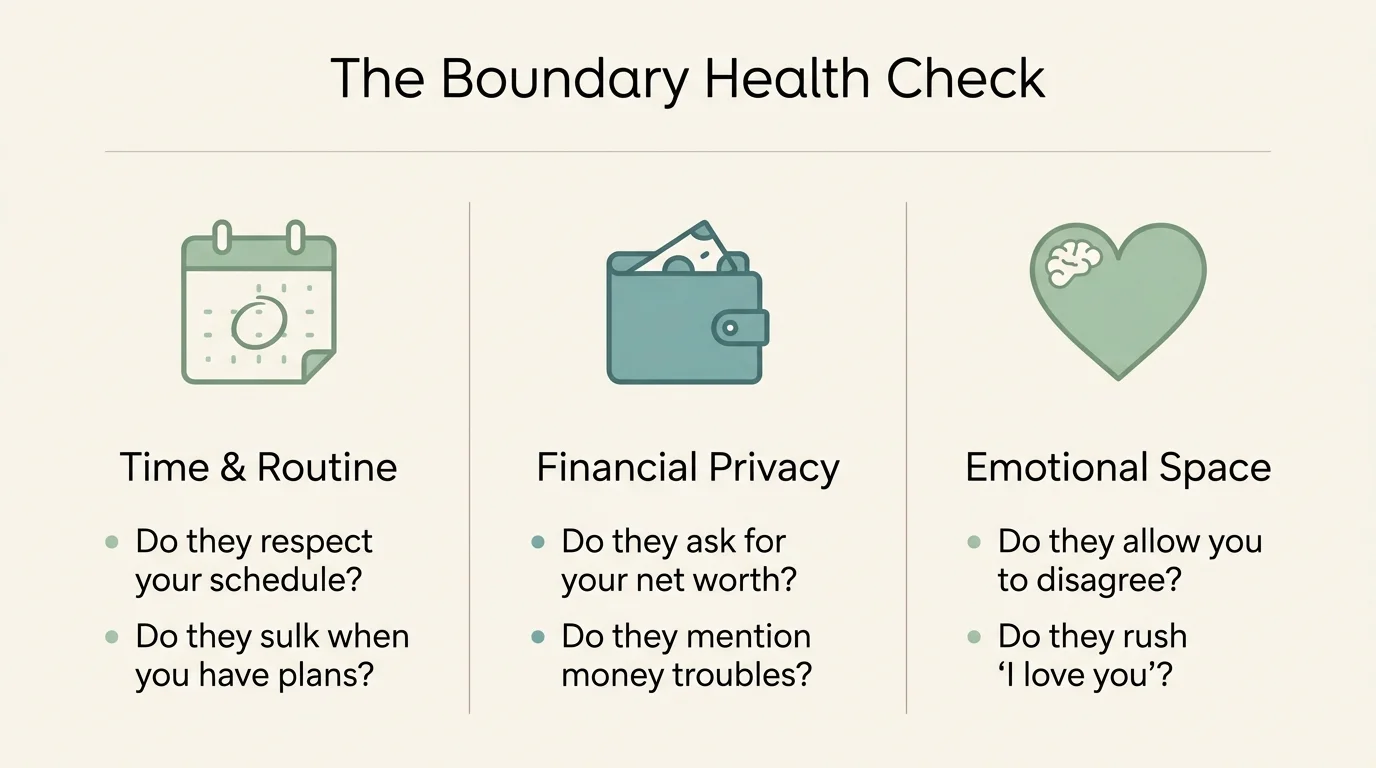
Use this practical checklist to evaluate whether a new romantic interest is truly respecting your personal limits:
- They accept the word “no” without retaliation: A respectful partner does not sulk, argue, or demand an exhaustive explanation when you decline a request.
- They honor your physical pacing: They never pressure you to accelerate physical intimacy before you feel entirely comfortable and secure.
- They respect your established lifestyle: They do not pressure you to alter your daily schedule, abandon your favorite hobbies, or cancel meaningful plans with your friends and family.
- They value your communication preferences: If you ask them not to call during your work hours or late at night, they cheerfully abide by those limits.
- They correct course immediately: If they accidentally cross a line, they offer a sincere apology and change their behavior, rather than turning the situation around to play the victim.
If you notice a consistent pattern of boundary erosion, recognize it for what it is—a dangerous precursor to deeper control and manipulation issues.

They Stonewall or Punish You During Disagreements
Conflict is an entirely natural, inevitable component of any relationship, regardless of your age, wisdom, or overall compatibility. The true health of a partnership is not measured by a complete absence of disagreements, but rather by how both parties navigate those moments of inevitable friction. Stonewalling—the act of shutting down, physically withdrawing from the interaction, or giving you a prolonged silent treatment—is a severe emotional manipulation tactic.
According to relationship experts, individuals sometimes stonewall because they experience physiological flooding; their nervous system becomes so overwhelmed by the conflict that their heart rate spikes, making rational discussion biologically difficult. However, a mature adult handles this overwhelm by asking for a healthy timeout. They will say, “I am feeling too frustrated to talk right now; I need twenty minutes to calm down, but I promise we will finish this conversation.”
A toxic partner, on the other hand, weaponizes the silence. When you express mild frustration over a broken promise or a hurtful comment, they cross their arms, refuse to make eye contact, and stop speaking to you for days. This leaves you entirely alone to carry the emotional burden of the conflict. It is a calculated power play designed to make you feel desperate, anxious, and ultimately willing to apologize just to restore a false sense of peace. You need a partner who will bravely turn toward you during a disagreement, not one who builds an impenetrable brick wall to keep you locked out.

Protecting Your Peace and Embracing Authentic Love
Your emotional and physical safety must always remain your highest priority. While many relationship red flags result from simple incompatibility, differing lifestyles, or poor communication skills, others are glaring indicators of deep-seated abusive tendencies. Dating in your fifties and beyond should be an enriching, joyful chapter of your life, completely unburdened by the unnecessary drama and toxic dynamics you might have tolerated in your youth.
You must give yourself permission to trust your intuition unconditionally. If a situation feels consistently draining, unpredictable, or inherently unsafe, do not waste your precious energy trying to rationalize the behavior or fix the person. You do not owe anyone a second date, a prolonged explanation, or a chance to prove themselves if your gut is screaming at you to walk away.
Please remember that emotional coercion, extreme isolation, and financial manipulation are all severe forms of abuse. If you ever feel unsafe, experience intense distress, or notice escalating controlling behavior from a partner, seek immediate guidance from professionals who can help you safely navigate the situation. You can easily contact the National Domestic Violence Hotline at 800-799-7233 or text “START” to 88788 for free, strictly confidential support and safety planning.
Entering the dating pool later in life is an extraordinary opportunity to find a companion who truly complements the beautiful, complex life you have already built. By remaining highly vigilant, setting uncompromising personal boundaries, and refusing to ignore these critical warning signs, you actively clear the path for a respectful, deeply fulfilling romance.