
Spotting a lie is rarely as simple as catching someone avoiding eye contact or fidgeting with their hands. Deception requires a complex psychological dance; the brain works overtime to fabricate reality, suppress the truth, and monitor your reaction simultaneously. When you understand the mental mechanics of dishonesty, you can recognize the subtle behavioral leaks that happen when a person’s cognitive load becomes too heavy. Whether you are navigating a new romance, assessing a long-term partnership, or trying to read a complicated dating scenario, identifying these signs empowers you to protect your boundaries. Here are the psychological patterns to watch for when you suspect a partner is hiding the truth.
1. Micro-Expressions and Emotional Leakage
When a person attempts to conceal their true emotions, their genuine feelings often manifest as micro-expressions—involuntary facial movements that last only a fraction of a second. The human brain cannot always suppress powerful emotions before the facial muscles react, meaning a flash of anger, contempt, or fear will often breach the surface before the person hastily covers it with a socially acceptable mask.
Imagine you ask your partner where they were last night. They smile and casually say they were working late, but for a split second, you catch a sudden tightening of the jaw or a brief sneer of contempt. That rapid muscular contraction is the micro-expression revealing their true internal state. Because these expressions are entirely subconscious, they serve as a reliable indicator of concealed emotion. While a single micro-expression does not automatically prove malicious deceit, it signals an emotional incongruence that warrants closer attention. Your goal is not to interrogate them over a twitch, but to note the mismatch between their words and their raw physical reaction.
2. Chronological Fragmentation and Cognitive Overload
Lying is mentally exhausting. When someone tells the truth, they simply retrieve a memory. When someone lies, they must invent a scenario, check it against reality to ensure plausibility, and monitor your reaction to see if you believe them. This massive mental effort is known as cognitive load.
Because liars typically rehearse their fabricated stories in chronological order, their narrative can fall apart when you disrupt their timeline. Studies on cognitive load and deception demonstrate that asking a person to recall events in reverse order dramatically increases their mental strain, making it much harder to maintain a lie. If you suspect a fabricated story, casually ask a clarifying question about the middle or the beginning of their timeline. For example, you might ask, “Wait, what happened right before you got to the restaurant?” A truth-teller will pause to retrieve the memory naturally; a liar will often stumble, contradict themselves, or become visibly flustered because you broke their rehearsed script.
3. Distancing Language and Pronoun Shifts
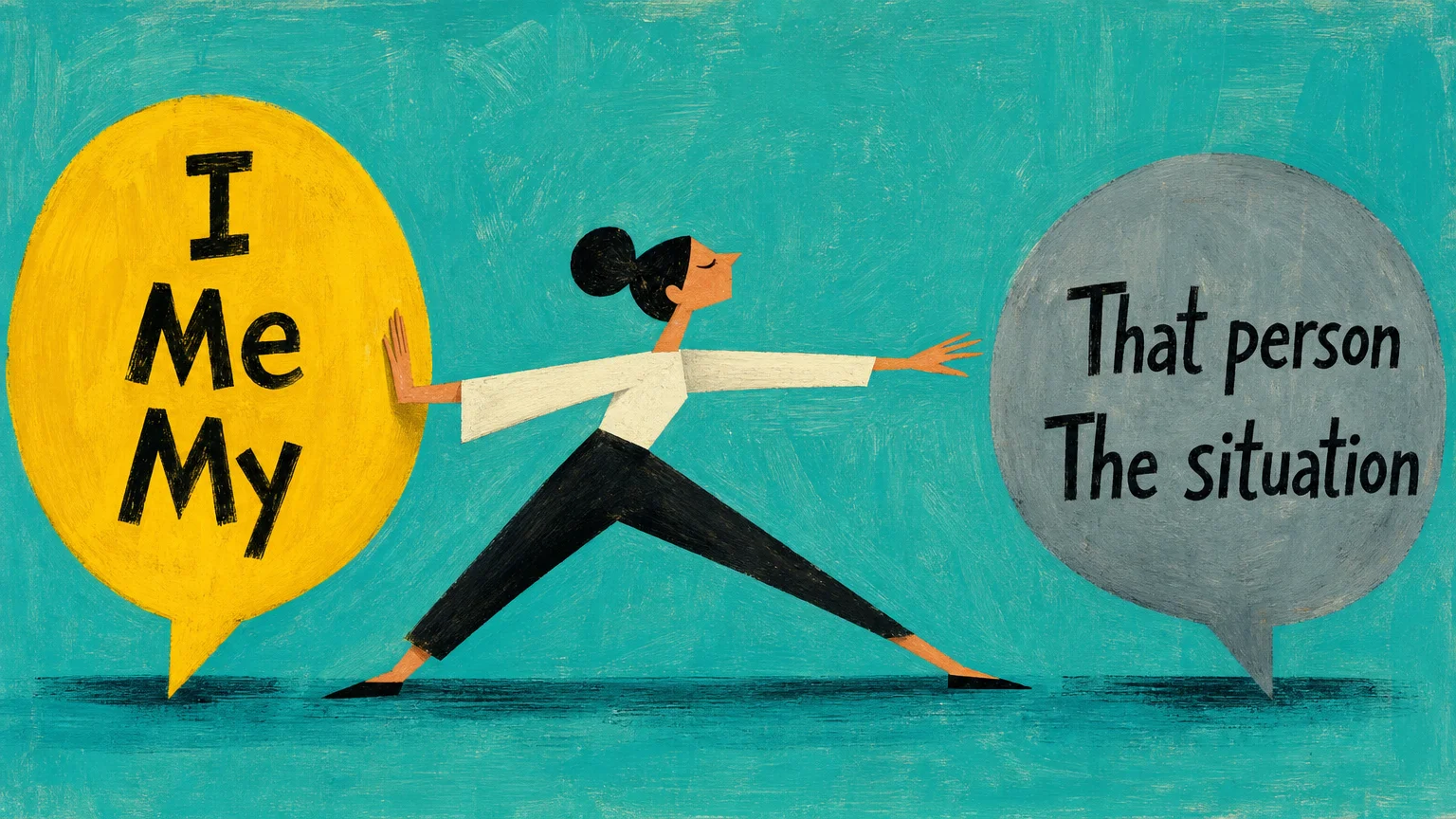
Language choices offer a direct window into the subconscious mind. When people lie, they often feel underlying psychological guilt or discomfort regarding their deceit. To manage this discomfort, they subconsciously alter their vocabulary to distance themselves from the event.
One of the most common linguistic clues of deception is the sudden omission of first-person pronouns like “I,” “me,” or “my.” Instead of saying, “I didn’t break your phone,” a deceptive partner might use passive voice, stating, “The phone was not damaged by anyone here.” They might also use distancing terms to describe people they are trying to hide a connection with. A partner who is secretly messaging a coworker might refer to them rigidly as “that person from the office” rather than using their name. This subtle pronoun shift helps the liar detach from the falsehood, making the lie feel less personal and easier to deliver.

4. Overcompensating with Unnecessary Details
Truth-tellers generally assume that their honesty is self-evident. They provide the core facts of an event and comfortably wait for you to ask follow-up questions if you need more information. Liars, on the other hand, often fear silence. They worry that a brief, simple answer will look suspicious, so they overcompensate by drowning you in an ocean of irrelevant details.
If you ask a partner why they are an hour late coming home, a truthful response might be, “Traffic on the highway was a nightmare because of an accident.” A deceptive partner might launch into a meticulously detailed saga: “I left the office at exactly 5:15, but then I realized I forgot my umbrella, so I went back to my desk. Then, I took the backroads near the old gas station, and you wouldn’t believe the line of cars—there was a blue truck blocking the entire intersection.” This phenomenon, often called the “too much information” effect, is an attempt to build a fortress of facts around a fragile lie. They hope that by giving you highly specific details, the story will appear impenetrable.

5. The Defensive Pivot and Gaslighting
Honest people usually respond to mild questioning with cooperation. If you ask a truthful partner to clarify a misunderstanding, they will focus on explaining the facts to clear their name. A deceptive person often responds to questioning with immediate, disproportionate aggression.
This psychological defense mechanism is designed to put you on trial instead of them. If you ask about a suspicious text message, they might pivot by saying, “I can’t believe you are invading my privacy. You are always so paranoid and insecure!” This specific deflection is a form of gaslighting, heavily overlapping with the manipulation tactic known as DARVO—Deny, Attack, and Reverse Victim and Offender. By attacking your character and framing themselves as the victim of your “unreasonable” questioning, they force you to defend your actions, effectively distracting you from their original lie.
6. Incongruent Body Language
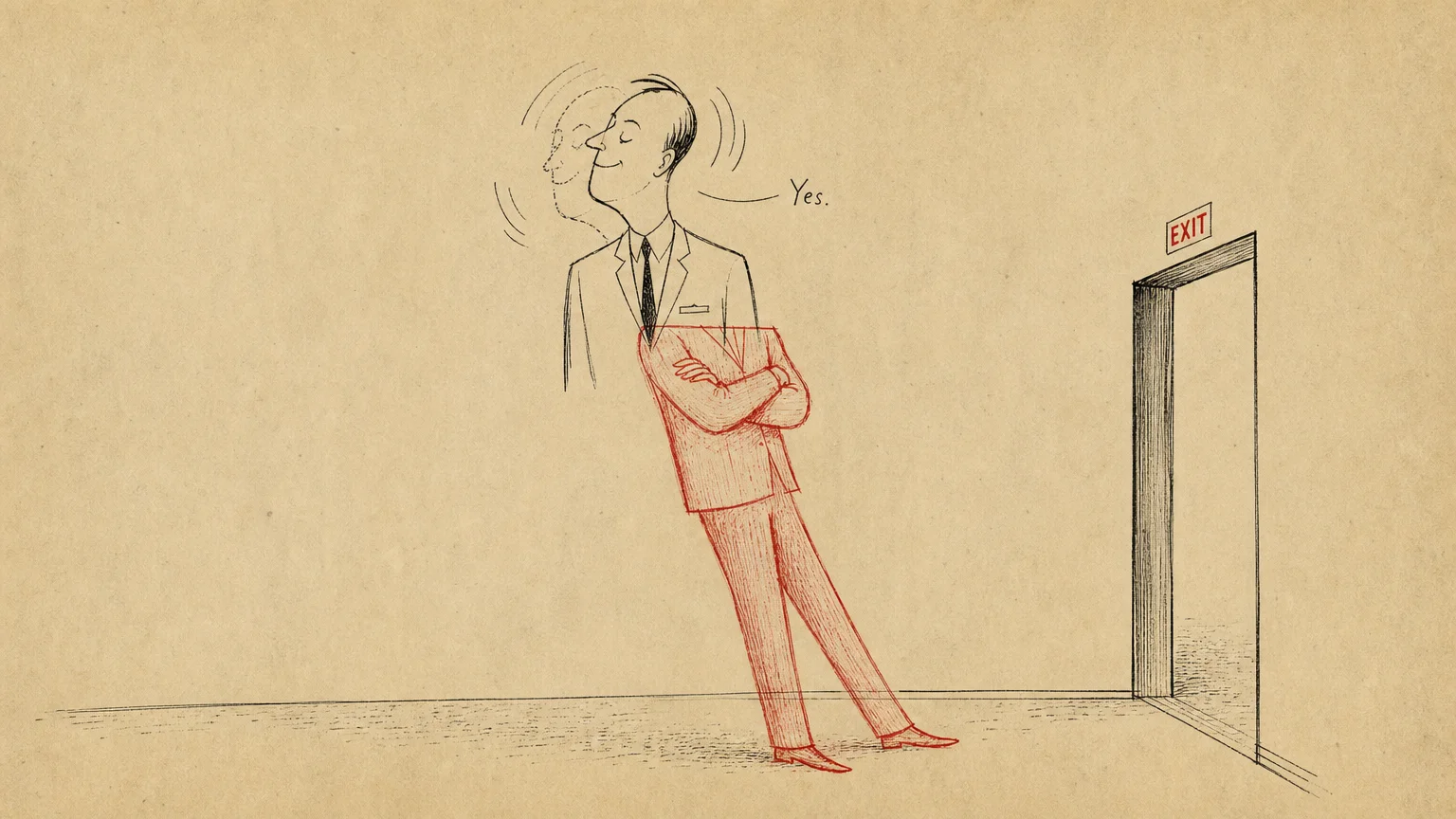
When spinning a false narrative, a person’s brain is heavily focused on controlling their speech, leaving less mental bandwidth to manage their physical movements. As a result, their body language often betrays the truth of their words through incongruent gestures.
Look for moments when their physical actions directly contradict their verbal statements. A classic example is a partner nodding their head “yes” while emphatically stating “no.” Alternatively, they might shrug one shoulder while making a definitive, confident claim—a gesture that physically leaks uncertainty and doubt. You might also notice asymmetrical facial expressions, such as a smile that only pulls up on one side of the face, which often indicates contempt or forced emotion rather than genuine happiness. When the body and the voice tell two different stories, the body is usually telling the truth.
7. Vocal Pitch Variations and Speech Hesitation
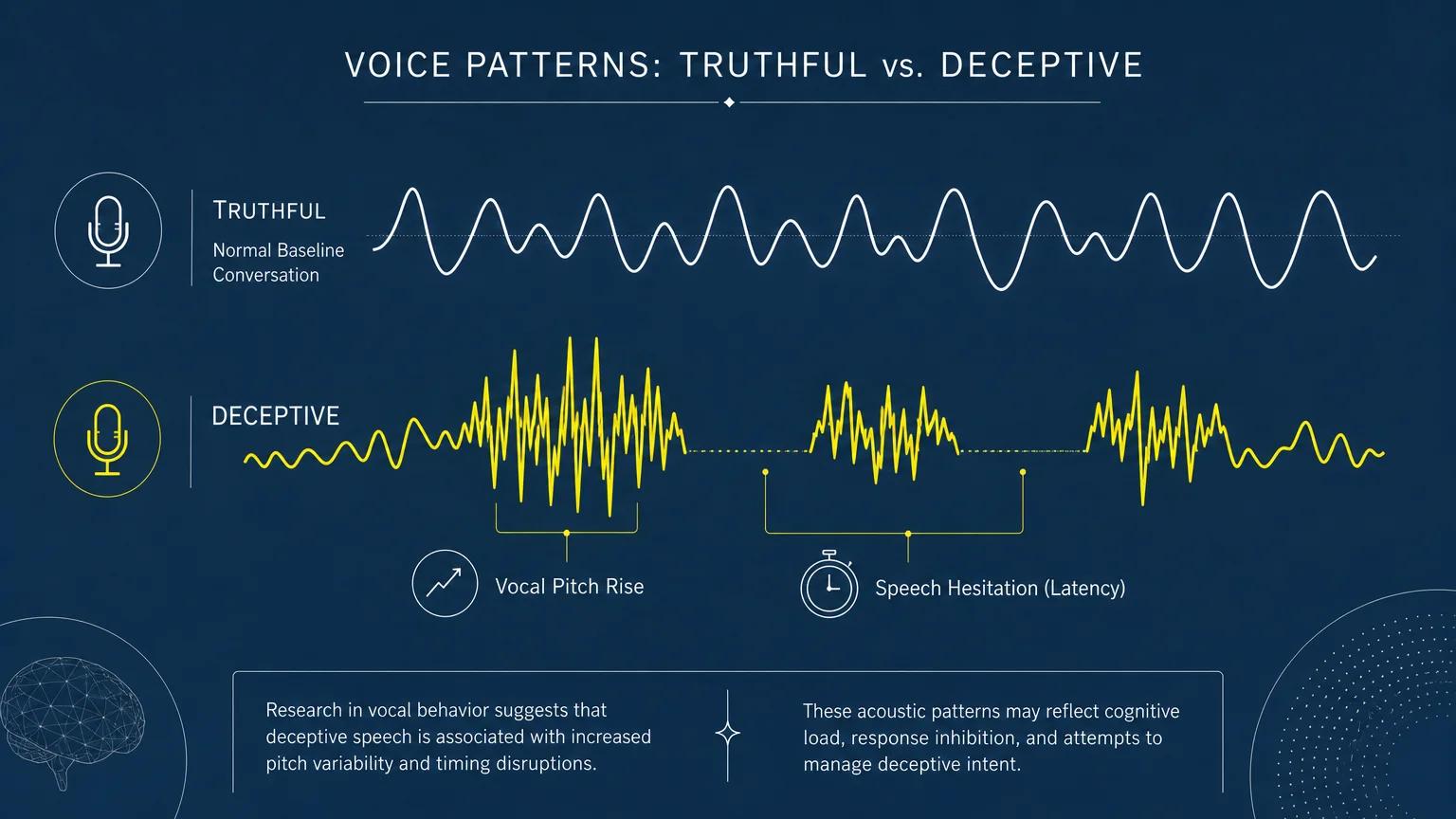
The stress of lying triggers the body’s autonomic nervous system, which can cause physical changes that affect the voice. When a person is afraid of being caught in a lie, their vocal cords can tighten, causing their voice pitch to suddenly rise.
Beyond pitch, the pacing of their speech will often shift. Pay close attention to “latency to respond”—an unusually long pause before answering a simple, straightforward question. To buy extra time to formulate a believable response, a liar will frequently repeat your question back to you. If you ask, “Did you go to your ex’s house yesterday?” and they reply, “Did I go to my ex’s house yesterday? No, of course not,” they are using that repetition as a stalling tactic. A truth-teller simply accesses the memory and answers immediately.

8. Vague Responses to Direct Questions
Many people feel an innate moral resistance to telling a direct, outright lie. To bypass this discomfort, they use equivocation—answering a question with a vague, generalized statement that sounds definitive but actually avoids addressing the specific accusation.
If you ask a partner if they deleted messages from their phone, an evasive responder might say, “I am an honest person; I would never do something like that.” Notice that they did not actually say “no.” They offered a character reference instead of a factual denial. They might also use phrases like “To the best of my knowledge” or “As far as I recall” when discussing recent events that anyone would clearly remember. These qualifiers leave an intentional loophole, allowing them to claim they simply “forgot” if the truth ever comes to light.

9. Lack of Emotional Resonance
When someone recounts a genuine memory, they re-experience a fraction of the emotion associated with that event. Their facial expressions, vocal tone, and gestures naturally align with the emotional weight of the story. A deceptive narrative often lacks this emotional resonance.
If a partner tells you a story about a highly stressful or chaotic event that supposedly made them late, but they deliver the story with a flat, robotic, or remarkably calm affect, take note. Because their brain is fully occupied with remembering the structural details of the fabricated script, they forget to naturally emulate the emotion that should accompany it. Conversely, they might manufacture exaggerated, theatrical emotions that feel forced and shut off the moment the conversation ends.

“A man looks away with clasped hands, illustrating a sudden and suspicious shift in baseline behavior.”
1. A
2. man
3. looks
4. away
5. with
6. clasped
10. A Sudden Shift in Baseline Behavior
This is the absolute most important rule in behavioral profiling: there is no single universal sign of lying. Avoiding eye contact or fidgeting does not inherently mean a person is lying; it might just mean they have social anxiety or ADHD. The true psychological clue of deception is a sudden, unexplained deviation from a person’s normal behavioral baseline.
You know your partner’s baseline better than anyone. If your partner normally talks with their hands and suddenly sits rigidly still when answering a question, that sudden freeze response is a red flag. If they are usually calm and quiet but suddenly become hyperactive, overly charming, and fast-talking when explaining an absence, that shift is suspicious. You are not looking for general signs of nervousness; you are looking for an abrupt departure from how they normally act when they are comfortable and honest.
Actionable Checklist: How to Process Signs of Deception
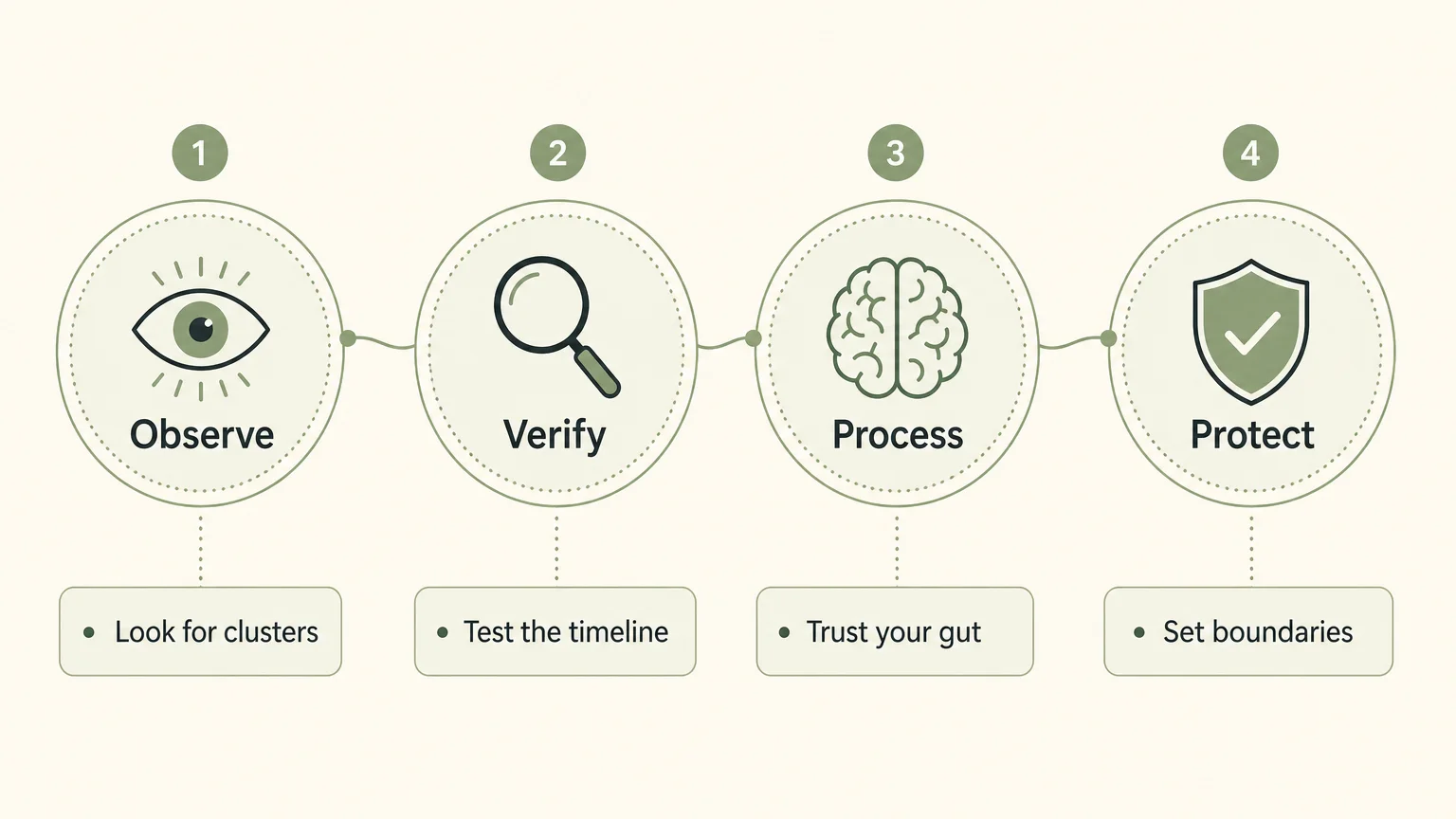
Recognizing these clues is only the first step. If you suspect deception, it is vital to process your observations calmly and strategically. Use this checklist to navigate the situation:
- Establish the Baseline First: Before assessing a potentially stressful conversation, remind yourself of how this person acts when they are relaxed and telling the truth. Base your judgments purely on deviations from this normal state.
- Look for Clusters: A single behavior—like a voice crack or a brief pause—means nothing on its own. Look for clusters of three or more clues happening simultaneously. A delayed response paired with an incongruent head nod and a defensive pivot is a strong cluster.
- Utilize the Power of Silence: When they finish their explanation, simply hold eye contact and remain silent for a few seconds. Truth-tellers will comfortably wait for your response. Liars abhor a vacuum; they will nervously rush to fill the silence with more unnecessary details or defensive questions.
- Ask Open-Ended Questions: Instead of asking “yes or no” questions which are easy to lie to, ask “How,” “Why,” and “Can you tell me more about…” to force them to expand their narrative. The more they speak, the heavier their cognitive load becomes.
- Trust Your Gut, but Verify: Your intuition is a powerful subconscious processor that often picks up on micro-expressions and incongruences before your conscious mind does. Acknowledge your gut feeling, but avoid making immediate accusations until you have observed concrete behavioral patterns.

Prioritizing Your Safety and Mental Health
While occasional white lies are a common human flaw, chronic deception fundamentally damages the trust required for a healthy relationship. It is crucial to distinguish between a partner hiding a minor mistake out of embarrassment and a partner who uses deception to actively manipulate your reality.
If you discover that deception in your relationship is accompanied by gaslighting, coercion, controlling behavior, or any form of emotional abuse, please prioritize your safety. Chronic, severe dishonesty is often a hallmark of an abusive dynamic. If you are experiencing severe distress, confusion, or fear for your physical safety, you do not have to navigate this alone. Please seek outside help from a licensed mental health professional or reach out to the National Domestic Violence Hotline for free, confidential support. Younger adults and teenagers navigating difficult relationship dynamics can also find specialized guidance and dating safety resources at Love is Respect.
A thriving relationship is built on a foundation of mutual trust, emotional safety, and transparent communication. By educating yourself on the psychological realities of deception, you remove the blinders that keep you stuck in cycles of doubt. Pay attention to the subtle shifts in behavior, trust your deeply rooted intuition, and consistently advocate for the honest, respectful partnership you deserve.