

Disentangling genuine remorse from emotional nostalgia reveals whether your ex truly wants to heal old wounds or simply soothe their own guilt. You can identify their real intentions by watching how they handle past mistakes.
When someone experiences deep remorse after a painful split, their behavior shifts from defensive posturing to quiet, consistent accountability. They focus entirely on your healing rather than forcing a quick reconciliation.
Recognizing the clearest signs your ex regrets the breakup helps you protect your peace while evaluating whether their remorse is authentic.

1. They Deliver an Unsolicited, Highly Specific Apology
A partner who regrets their behavior will not wait for you to corner them before apologizing. Instead, they initiate contact specifically to address their conduct, identifying exact incidents rather than offering vague platitudes.
Psychological research from the American Psychological Association notes that effective apologies require acknowledging harm without demanding immediate absolution. They state clearly: “I was selfish when I dismissed your feelings, and I hurt you.”
They do not hide behind vague text messages. Instead, they request a respectful time to speak or send a well-considered, thoughtful letter outlining their missteps.
2. They Take Full Ownership Without Defensive Justifications
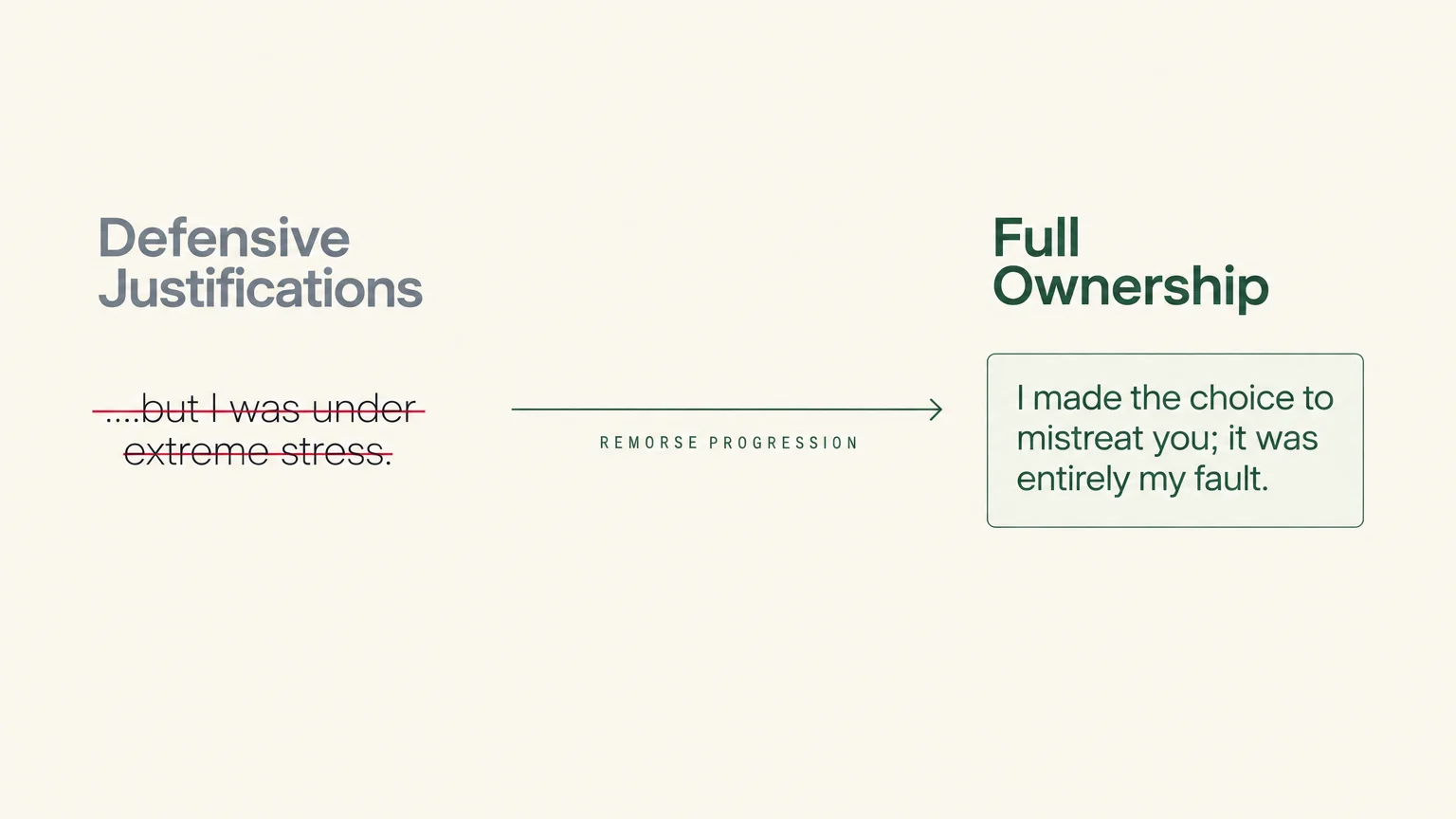
Pay close attention to whether their statements contain disqualifying conjunctions like “but” or “if only.” When a person is truly remorseful, they remove conditional clauses and accept full responsibility for their decisions.
Excuses like job stress, alcohol, or childhood wounds disappear from their explanations. They acknowledge that while personal stressors exist, choosing to mistreat or betray you was entirely their fault.
Notice whether they accept your version of events without dispute. When someone drops their defense mechanisms entirely, they validate your lived experience without trying to rewrite history.

3. They Respect Your Boundaries Without Testing Your Limits
If you ask for space or establish a no-contact period, a remorseful ex honors that instruction without complaint. They recognize that pressing past your boundary merely inflicts further emotional distress.
When someone routinely sends late-night texts or lingers near your workplace, they prioritize their anxiety over your safety. An ex seeking authentic amends waits patiently for you to welcome communication.
If you instruct them to reach out only via email, they never call or show up unannounced. Honoring minor boundaries demonstrates that they now value your personal sovereignty.
4. They Demonstrate Consistent Behavioral Change Over Time
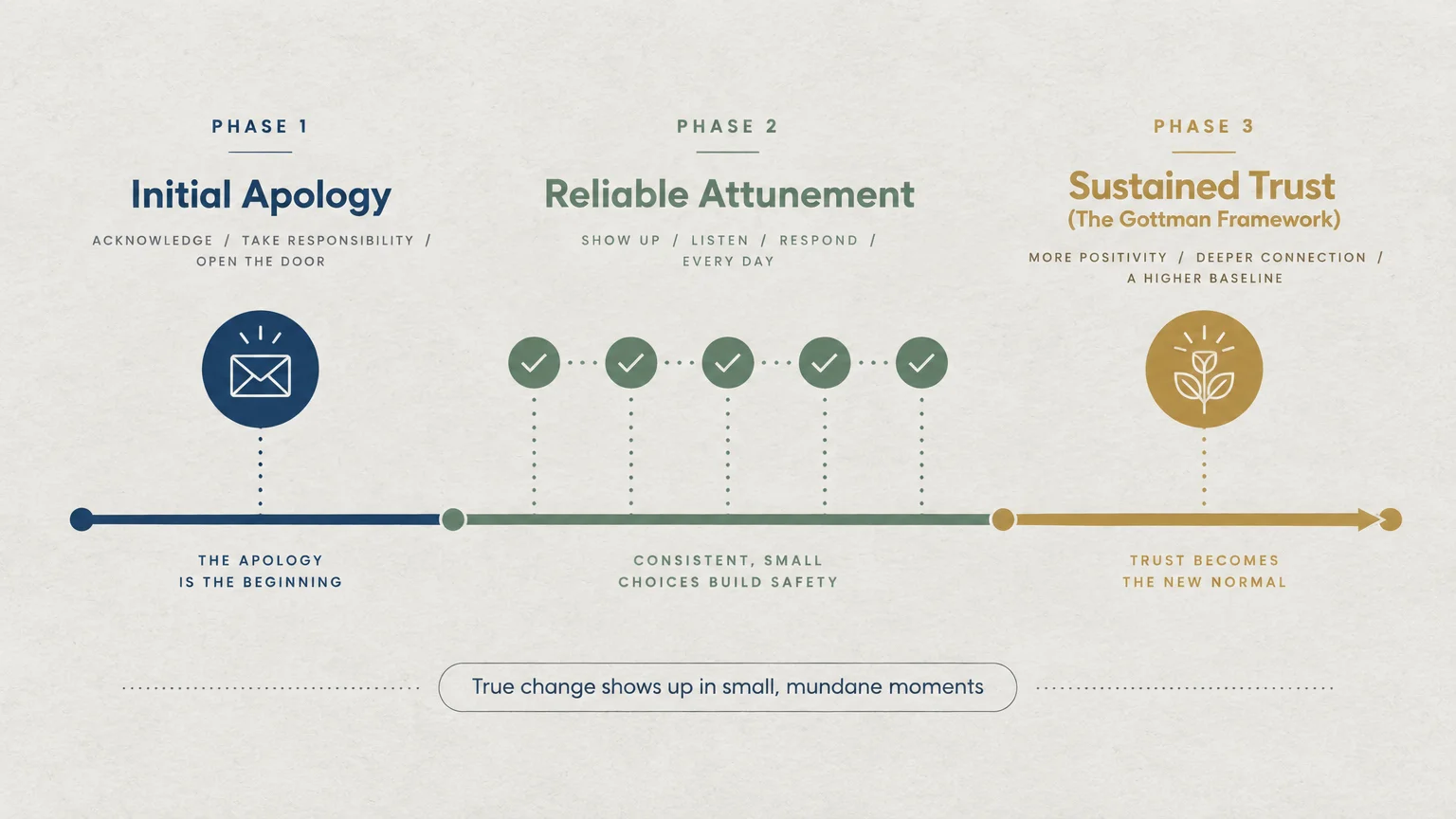
Apologies sound comforting, but sustained patterns of changed behavior reveal genuine character transformation. If your ex struggled with chronic unreliability or angry outbursts, their daily temperament must show lasting stability.
According to clinical frameworks developed by The Gottman Institute, rebuilding broken trust requires reliable attunement and transparent accountability over extended periods. You cannot measure sincere regret in single days or emotional weekend conversations.
Look for calm reactions during disagreements and consistent follow-through on minor daily commitments. True change shows up in small, mundane moments long before major declarations happen.

5. They Validate Your Emotional Pain Instead of Minimizing It
When you explain how their betrayal felt, a contrite ex absorbs your words without interrupting. They do not argue about their original intent or accuse you of holding grudges.
Instead, they mirror your perspective and validate your emotional reality; they admit that your lingering pain makes complete sense. They sit calmly with your anger rather than rushing to soothe their discomfort.
A truly remorseful partner avoids turning your hurt into an academic debate. They remain present with your vulnerability, offering a safe container for emotions they previously suppressed or mocked.

6. They Inquire About Your Well-Being Without Hidden Agendas
You might wonder, “Does my ex still care about me, or do they just miss my attention?” An ex experiencing real regret checks on your physical, professional, and personal well-being without pivoting toward romance.
Their messages focus on your life milestones, health challenges, or career victories without subtle demands for meetups. They seek reassurance that you are thriving, even if that thriving occurs completely independent of them.
They celebrate your personal growth from a distance with sincere warmth. Their satisfaction comes from knowing you are healthy and thriving, not from maintaining emotional leverage over you.

7. They Invest in Independent Counseling or Self-Work
Talk remains cheap until backed by tangible investment in emotional growth. An ex who recognizes their toxic or neglectful patterns often seeks individual psychotherapy to dismantle the root causes of their dysfunction.
They do not broadcast this effort as a manipulative performance to win you back. Rather, they quietly pursue personal growth because they feel genuine remorse for how their choices damaged the relationship.
Research published through the Greater Good Science Center highlights that self-reflection and humble self-correction are foundational components of genuine moral repair. Notice whether they mention insights they are learning about their own emotional blind spots.
8. They Stop Playing the Victim to Mutual Acquaintances
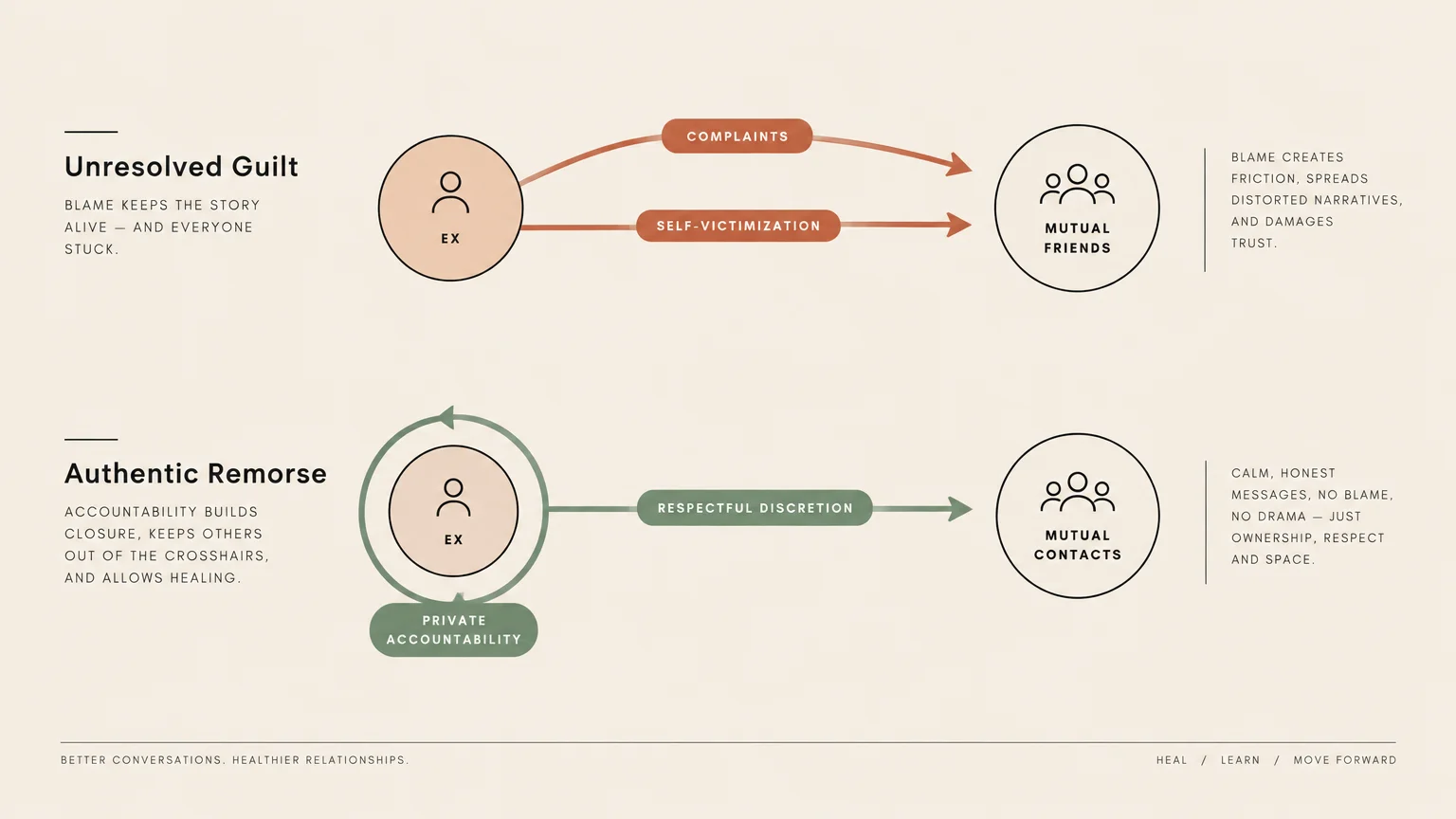
Immature partners often orchestrate smear campaigns or frame themselves as tragic victims to mutual acquaintances. Conversely, an ex who deeply regrets hurting you sets the record straight with family and social circles.
They openly admit their mistakes when mutual peers inquire about the split. They defend your dignity and refuse to let anyone unfairly cast you as the villain.
By holding themselves publicly accountable, they dismantle rumors that could damage your social standing. They prioritize your social dignity over protecting their fragile ego.

9. They Acknowledge the Specific Damage They Caused
Vague apologies like “I am sorry for everything” often disguise a superficial desire to erase social tension. A partner exhibiting genuine signs of regret after a breakup details the exact emotional ripples their choices created.
They recognize how their broken commitments undermined your ability to trust others or disrupted your daily life. Articulating the collateral damage proves they have spent substantial time contemplating your perspective.
For instance, they might acknowledge how breaking their promises eroded your confidence at work or caused panic attacks. Connecting their bad decisions to your emotional distress proves genuine psychological insight.

10. They Exhibit Genuine Patience With Your Skepticism
When someone hurts you deeply, your guarded skepticism is both natural and necessary. An ex who genuinely wants to make amends never scolds you for maintaining your emotional guard.
They accept that earning back emotional safety takes months or years rather than casual conversations. They endure your hesitations with grace because they understand their past choices created the distance.
If they snap and complain that you are taking too long to forgive them, their remorse is hollow. Genuine repentance never operates on a self-serving deadline.
11. They Relinquish Demands and Romantic Pressure
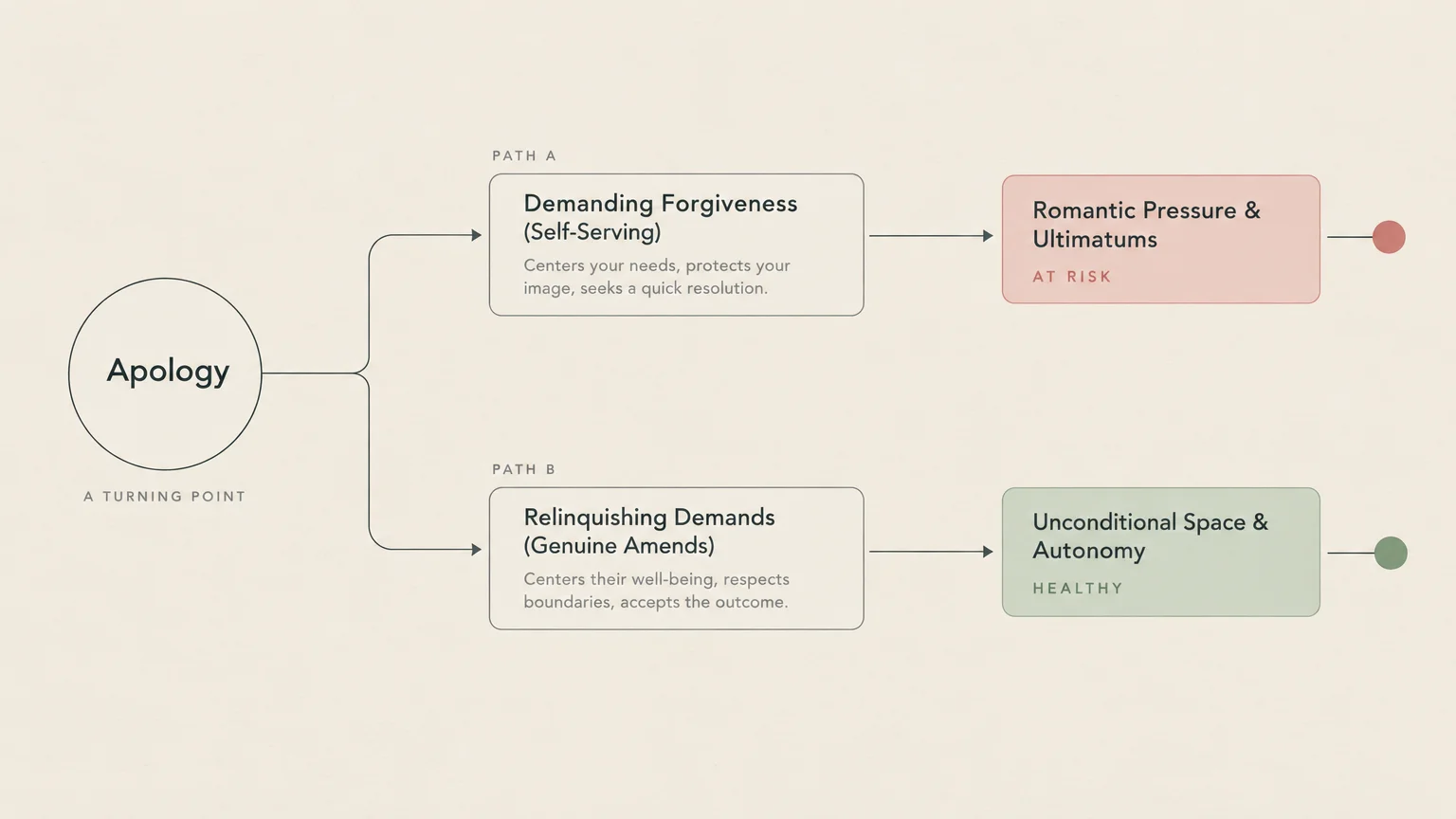
Many people mistake desperate appeals for love, but possessive persistence is often purely about self-gratification. An ex motivated by authentic remorse relinquishes romantic pressure and ultimatum tactics.
They do not condition their kindness on whether you agree to rekindle romantic ties. If they treat amends as a transaction to secure dates, their core focus remains selfish.
They allow you to set the terms and tempo of any interaction. If you prefer to exchange one brief email every few months, they honor that pace without complaint.

12. They Make Tangible Restitution Where Possible
True amends frequently involve addressing concrete harms alongside emotional wounds. If their actions left you with shared debts, unfinished logistics, or damaged property, a remorseful ex works proactively to resolve those burdens.
They return your belongings promptly, settle outstanding financial commitments, and honor past promises without prompting. Handling practical responsibilities demonstrates adult maturity and respect for your livelihood.
They never use financial restitution or returning personal items as leverage to force a face-to-face meeting. Instead, they settle practical obligations quietly, cleanly, and without strings attached.

13. They Discuss Their Flaws Without Self-Pitying Theatrics
Shame often causes people to wallow in theatrical self-pity, claiming they are “terrible people” simply to fish for reassurance. That manipulative tactic forces you to comfort the very person who injured you.
In contrast, a grounded ex discusses their behavioral flaws with sober honesty and zero emotional drama. They focus entirely on remedying their character rather than manipulating your sympathy.
When an ex repeatedly says, “I hate myself for what I did,” they place their emotional distress at center stage. True remorse avoids theatrics and remains steadfastly centered on your healing.

14. They Express Authentic Gratitude for Your Past Efforts
An ex working through meaningful remorse recognizes how much grace and labor you poured into the partnership. They verbalize genuine gratitude for your loyalty, patience, and past sacrifices.
Rather than taking your historical efforts for granted, they express deep sorrow that they failed to value your devotion when it mattered most. This awareness indicates significant emotional maturity.
They might recall specific moments where you supported them through hardship, expressing deep regret that they repaid that loyalty with neglect. Acknowledging your kindness restores balance to your shared narrative.

15. They Prioritize Your Peace Over Reconciliation
The definitive test of remorse lies in what your ex prioritizes when interests clash. A partner who genuinely regrets hurting you cares far more about your emotional recovery than their romantic desires.
If you tell them that staying apart is vital for your long-term mental health, they honor that truth. Their ultimate goal is your flourishing, even when that future excludes them.
Choosing to walk away because staying hurts you more requires profound unselfishness. That willingness to surrender their romantic agenda represents the ultimate mark of authentic remorse.
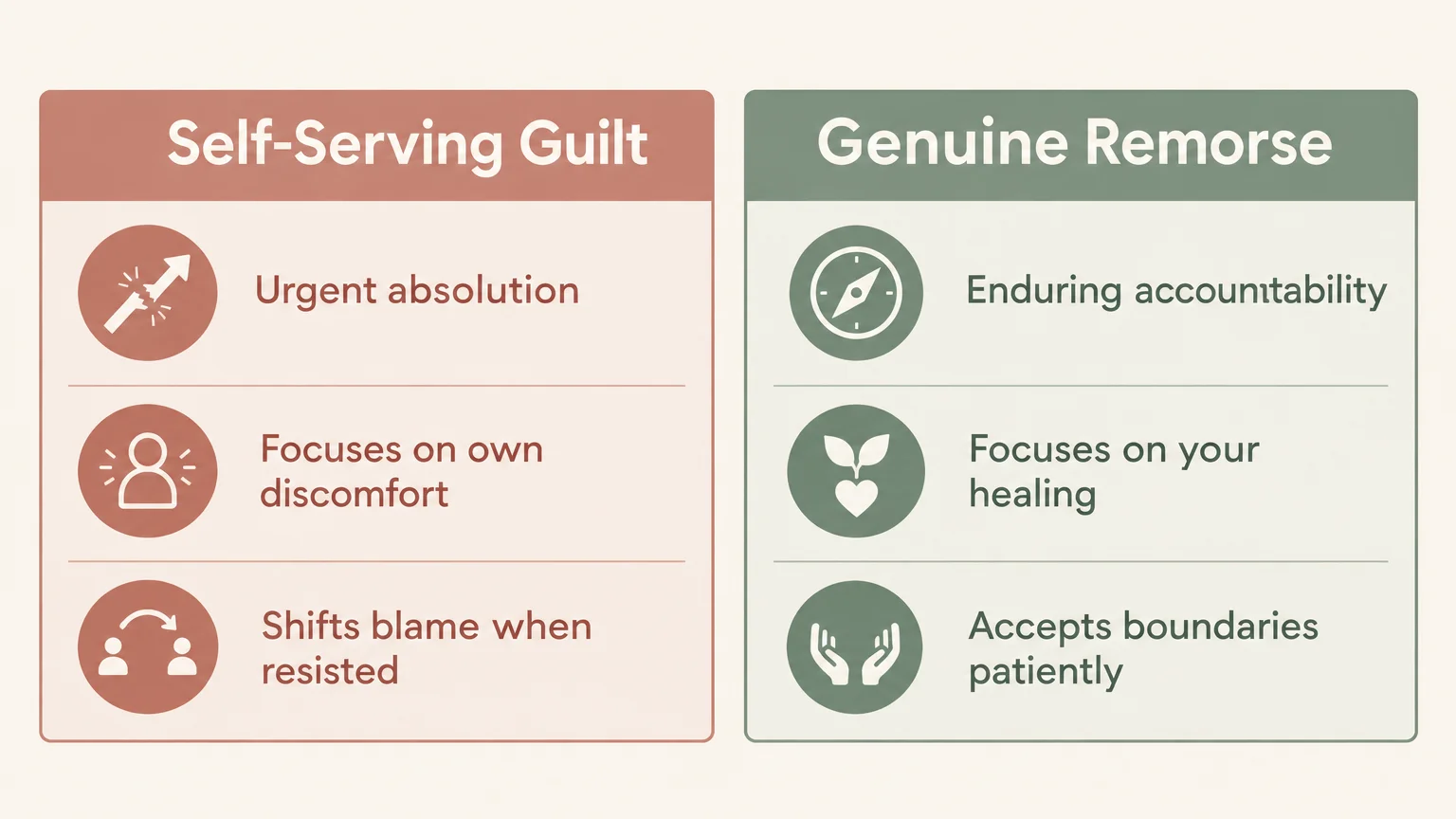
Distinguishing Genuine Remorse From Self-Serving Guilt
Guilt focuses entirely on the offender’s discomfort, driving them to seek fast absolution so they can stop feeling like a bad person. Remorse, however, focuses on the victim’s pain and demands ongoing personal accountability.
When you evaluate ex wants you back signs, use this behavioral checklist to determine whether their motives are healthy or self-centered.
- Specific Accountability: They name their exact offenses rather than using sweeping generalizations.
- No Defensiveness: They listen to your anger without interrupting, debating, or explaining away their behavior.
- Respect for Space: They step back immediately whenever you indicate a need for distance.
- Tangible Action: They seek therapy, address substance abuse, or resolve shared financial obligations independently.
- Zero Expectations: They offer amends without demanding romance, physical intimacy, or immediate friendship in return.
- Emotional Consistency: Their respectful demeanor persists over several months, not just during high-emotion conversations.
If your ex checks every item on this list, their remorse is likely authentic. If they fail on boundary respect or display defensiveness, their outreach stems primarily from guilt or loneliness.

Navigating Rekindling a Relationship Signs With Caution
Discovering clear rekindling a relationship signs can stir conflicting emotions, especially if you still harbor affection for your ex. However, reconciling prematurely often recreates the exact dynamics that caused your original heartbreak.
Before you consider reopening romantic doors, assess whether the fundamental conditions of your partnership have changed. Forgiveness does not require automatic reconciliation; you can accept an apology while choosing to remain single.
Demand observable evidence that past dysfunctional patterns—such as emotional stonewalling, deceit, or emotional volatility—have completely vanished. Healthy reconciliation requires building a brand new relationship with two transformed partners, not reviving the old dynamic.
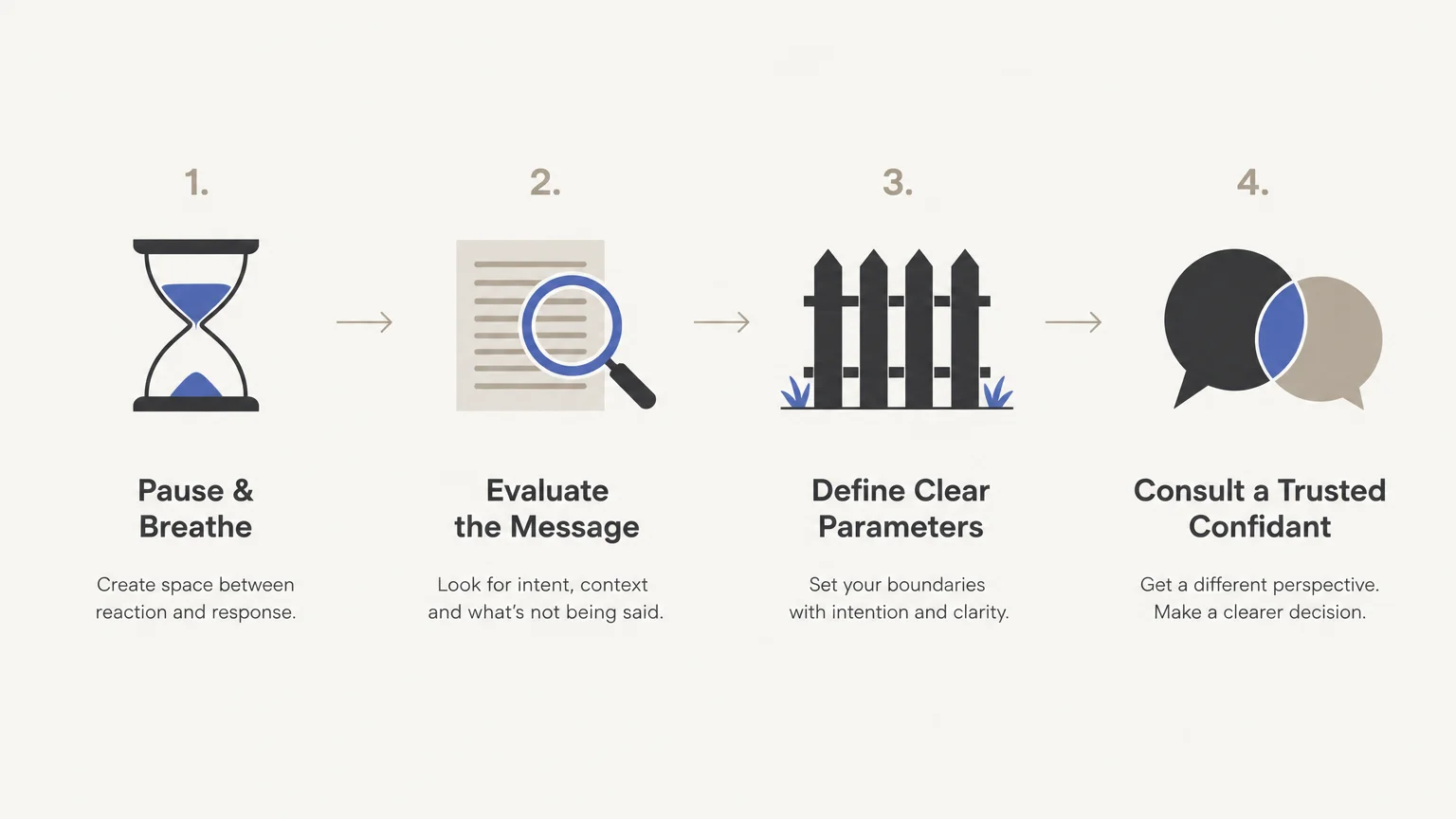
Actionable Steps to Take When Your Ex Reaches Out
When your ex reaches out to apologize, pause before typing an immediate response. Give yourself at least twenty-four hours to process your feelings without reacting impulsively.
Decide what outcome serves your peace best before engaging in any dialogue. You are under no obligation to meet in person, answer phone calls, or even acknowledge their message.
If you choose to respond, communicate your boundaries with firm clarity. You might say: “I appreciate your apology, but I need continued space to focus on my personal well-being.”
If you agree to a conversation, keep the interaction brief and focused on their amends. Observe whether they center your feelings or subtly steer the dialogue toward their romantic loneliness.

Prioritizing Your Mental Health and Safety
Navigating past relationship trauma can trigger acute emotional distress, anxiety, and confusion. Protecting your psychological well-being must remain your highest priority throughout this process.
If your previous relationship involved domestic abuse, emotional manipulation, coercive control, or physical intimidation, do not attempt to navigate amends alone. An abuser frequently uses apologies and superficial promises of change as part of the cycle of abuse.
Reach out immediately to licensed professionals or specialized advocacy organizations for guidance and safety planning. You can contact The National Domestic Violence Hotline at 1-800-799-SAFE (7233) for free, confidential support available 24/7.
Trust your instincts over persuasive rhetoric or emotional nostalgia. True healing begins when you prioritize your safety, self-respect, and peace above anyone else’s comfort.









Leave a Reply