

You can read the room before anyone speaks, adjusting your tone and choices to keep the peace. While this acute awareness looks like effortless empathy, it usually stems from a survival habit that silences your own desires.
Living as an emotional radar drains your vitality and leaves your authentic identity stranded in the background. Recognizing these subtle behaviors restores your agency and helps you rebuild genuine, balanced relationships.
Here are the foundational signs that you prioritize external expectations, along with clear steps to center your own well-being.
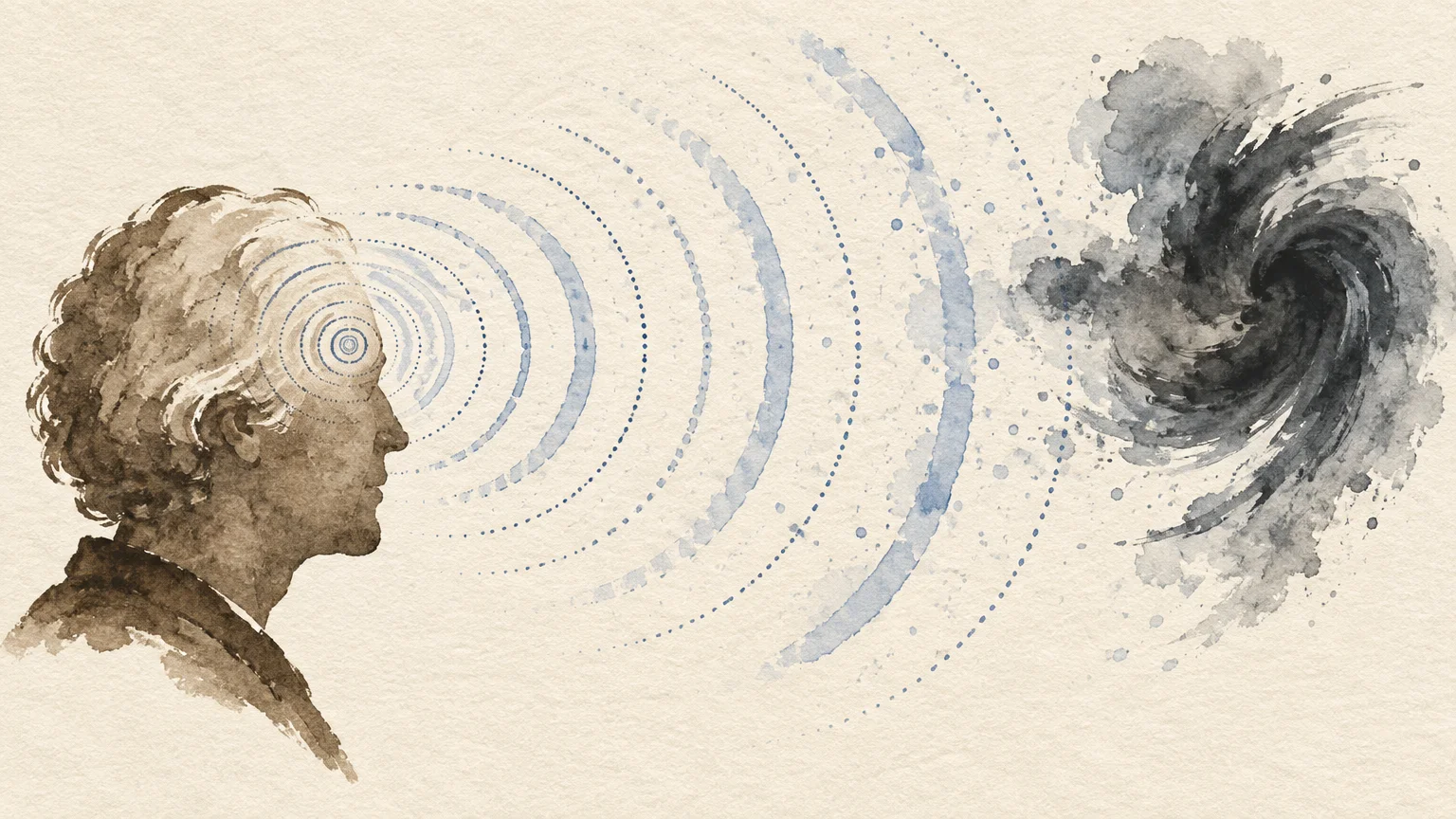
The Psychological Roots of Emotional Radar
Emotional radar does not appear overnight; it develops as an adaptive shield during childhood or turbulent relationships.
When primary caregivers or partners exhibit volatile emotions, children quickly learn that emotional safety requires rapid compliance and acute observation.
Clinicians describe this state as hyper-vigilance to others’ needs, where your autonomic nervous system treats another person’s frown as an urgent threat.
Research documented by the American Psychological Association shows that chronic interpersonal vigilance alters your neurobiology, heightening baseline anxiety and relational stress.
Over time, self-protection turns into an unconscious habit. You stop asking what you want because tracking external expectations consumes all of your bandwidth.

1. You Constantly Scan for Micro-Shifts in Mood
You notice the exact moment a partner shifts their posture, sighs under their breath, or types with slightly firmer keystrokes.
While most people overlook these subtle physical shifts, your body registers them as imminent warning sirens.
You instinctively assume responsibility for that ambient tension; your immediate impulse is to soothe the mood before conflict surfaces.
For instance, if your spouse enters the room frowning, you might instantly offer dinner options, clear clutter, or soften your voice.
These actions are classic people pleasing signs that disguise personal distress as selfless affection.
You appease others not out of pure generosity, but to manage your own internal panic about potential relational instability.

2. Reflexive Deference of Decisions and Desires
When a friend asks what restaurant you prefer, your mind goes completely blank.
You immediately default to phrases like “Anything works for me” or “Whatever you want sounds great.”
This reaction rarely reflects genuine neutrality; instead, it reveals an ingrained fear that having a clear preference will inconvenience someone.
People who put others first often detach from their own somatic signals, losing touch with basic feelings of hunger, fatigue, or preference.
By forcing your companion to choose, you dodge the risk of being blamed if the food arrives cold or the venue feels uncomfortable.
Over the years, this habit silences your distinct tastes, leaving you unsure of what you actually enjoy.

3. Preemptive Problem-Solving and Unsolicited Fixing
You fix logistical and emotional dilemmas before anyone even asks for your assistance.
If a coworker vents about a challenging assignment, you might spend your personal evening compiling research or designing templates for them.
This automatic rescuing crosses the boundary between authentic compassion and invasive over-functioning.
Sustained relationship research from The Gottman Institute emphasizes that lasting bonds rely on mutual responsiveness, not one partner orchestrating every outcome.
When you step in to eliminate every hurdle, you inadvertently rob your loved ones of their own resilience and growth.
At the same time, this self-sacrificing behavior leaves you carrying immense emotional weight that belongs entirely to other adults.

4. Visceral Guilt Whenever You Establish a Boundary
Setting a simple personal limit feels like committing an unforgivable offense.
Saying “no” to a weekend invitation or a favor request triggers physical distress, including stomach knots and a racing pulse.
Your nervous system equates personal boundaries with causing harm, confusing healthy self-protection with aggressive selfishness.
You often send over-explained apology messages, adding elaborate backstories to justify why you cannot attend or help.
This intense guilt exposes persistent codependency traits that tie your personal worth directly to constant self-erasure.
True intimacy requires room for refusal; without the freedom to say “no,” your “yes” carries no authentic meaning.

5. Social Chameleonism and Personality Masking
You instinctively mirror the tone, humor, and opinions of whoever shares your space.
When speaking with a reserved acquaintance, you restrain your natural enthusiasm; around a bold colleague, you dial up your intensity.
While adaptability aids smooth social interactions, total shapeshifting prevents anyone from meeting the real you.
You may nod along with perspectives you privately reject, solely to keep the conversation harmonious and friction-free.
As a result, you walk away from gatherings feeling intensely drained, because you performed a customized character rather than showing up authentically.

6. Chronic Exhaustion from Invisible Mental Labor
Monitoring the emotional climate of your surroundings demands incredible psychological and neurological bandwidth.
You track micro-expressions, conversational silences, dietary preferences, and unspoken resentments without granting yourself a single moment of rest.
Because this hyper-attunement occurs entirely in your head, no one around you sees the exhausting labor you perform.
Clinical resources from Mental Health America confirm that chronic relational hyper-arousal leads directly to physical fatigue, digestive issues, and burnout.
Your profound exhaustion is not a character flaw; it is the predictable outcome of carrying everyone else’s emotional comfort.

7. Simmering Resentment in Relationships You Anchor
Even as you present yourself as generous and dependable, an undercurrent of bitterness quietly forms.
You silently resent that friends and partners never anticipate your desires with the same dedicated precision you offer them.
However, because you hide your needs behind an efficient, self-sufficient facade, others genuinely believe you require no support.
You lock yourself into an unfair paradox: you give without being asked, expect telepathic reciprocation, and feel abandoned when nobody reads your mind.
Dismantling this silent resentment requires replacing expectations of mind-reading with direct, clear requests.

Healthy Attunement vs. Self-Sacrificing Caretaking
Many people confuse loving attunement with defensive caretaking, yet their underlying motivations could not be more different.
Attunement comes from an emotional surplus; you offer care because you genuinely want to enrich someone’s life.
In contrast, defensive caretaking operates from scarcity and fear, functioning as a desperate attempt to prevent rejection or anger.
Attuned partners accept that someone they love can experience anger or sadness without that emotion threatening the entire relationship.
Caretakers, however, perceive any negative emotion in the room as an emergency that demands immediate personal intervention.

Self-Reflection Checklist: Are You Sidelining Yourself?
Read through the following scenarios to evaluate how often you abandon your own well-being to accommodate others.
- You apologize immediately when someone bumps into you in public spaces.
- You alter your weekend plans whenever a friend expresses subtle disappointment.
- You feel responsible for cheering up anyone who seems down in your presence.
- You hide your personal accomplishments to keep peers from feeling inadequate.
- You feel a surge of panic whenever someone responds with a delayed text message.
- You accept extra workplace assignments even while drowning under existing deadlines.
- You struggle to name three personal activities that bring you unadulterated joy.
Recognizing these habits provides the clarity you need to step out of reactive caretaking and into authentic connection.
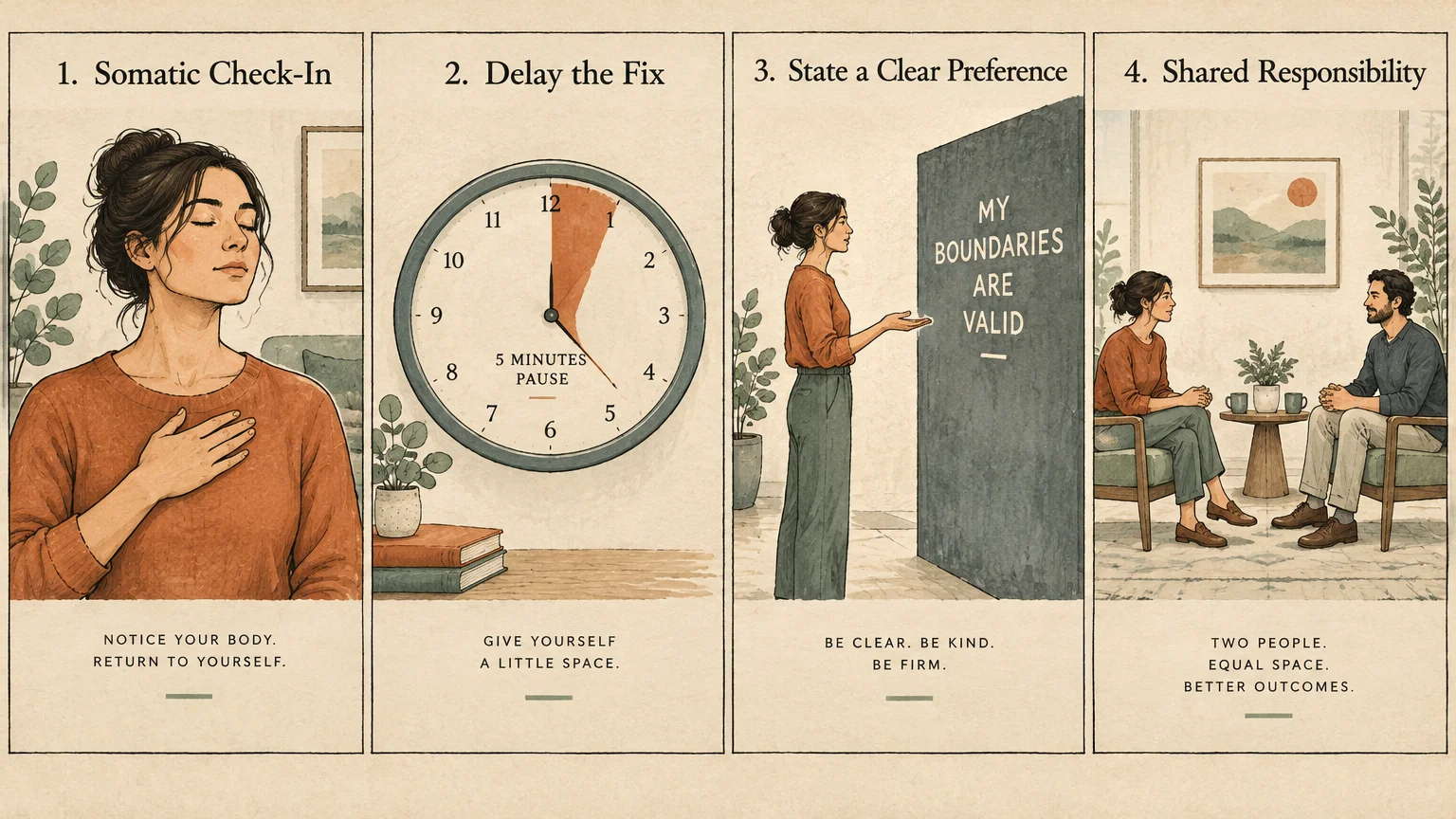
Four Actionable Practices to Center Your Own Needs
1. Institute the Ten-Second Buffer
When someone asks you for a favor or preference, deliberately delay your response for ten seconds.
Break your automatic reflex of saying “yes” by using a neutral placeholder phrase.
Try saying: “Let me check my calendar and get back to you in an hour.”
This brief pause severs the unconscious loop, giving your rational brain space to evaluate your true capacity.
2. Perform Regular Somatic Scans
Shift your attention away from everyone else’s facial expressions and drop your awareness into your own physical body.
Notice where you hold muscular tension, whether your breath is shallow, and whether your stomach feels tight.
Ask yourself two simple questions: “What does my body need right now?” and “Am I comfortable with this situation?”
Honoring your physical signals trains your nervous system to trust your internal cues over external demands.
3. Express Low-Stakes Preferences Daily
Rebuilding your personal voice starts with inconsequential daily decisions where the relational risk remains nearly zero.
Choose the coffee shop, pick the movie genre, or openly select the radio station during your next shared car ride.
State your opinion without tacking on self-deprecating apologies or asking if everyone else agrees.
Each low-stakes decision you claim rewires your brain to realize that asserting preferences does not trigger catastrophe.
4. Tolerate Other People’s Discomfort
When someone experiences frustration, sorrow, or disappointment, consciously resist the urge to soothe them immediately.
Remind yourself silently: “Their emotion belongs to them, and they are capable of feeling it.”
Allowing others to sit with their own struggles honors their emotional autonomy and protects your energetic bandwidth.
True respect means trusting that other adults can handle life’s normal frictions without your constant intervention.

Navigating Relationships While You Change
When you stop anticipating everyone’s needs, some people in your life will initially react with confusion or resistance.
Partners and friends who grew accustomed to your over-functioning may perceive your healthy limits as coldness or withdrawal.
Stay grounded during this adjustment period, remembering that boundary turbulence is a predictable stage of relationship evolution.
Communicate your shift with warm clarity rather than defensive hostility.
For example, say: “I love supporting you, but I need some quiet time this evening to recharge.”
Healthy relationships will adjust to your boundaries; one-sided connections that exist solely to extract your labor will show their limits.

Prioritizing Safety and Knowing When to Seek Help
Unlearning chronic self-sacrifice requires deliberate patience, and you do not need to walk this path in isolation.
If your habit of anticipating others stems from deep childhood wounds or past trauma, a licensed mental health professional can provide structured guidance.
Furthermore, remember that boundary setting requires a physically and emotionally safe environment to be effective.
If you navigate a relationship marked by manipulation, coercive control, or fear of violence, direct boundary setting can provoke retaliation.
In these situations, reach out to the National Domestic Violence Hotline for discreet safety planning and confidential advocacy.

Stepping Into Balanced, Reciprocal Love
You do not need to earn your place in relationships by serving as a perpetual caretaker.
Releasing the exhausting burden of monitoring everyone else allows you to rediscover who you are underneath the coping mechanisms.
Your authentic feelings, personal boundaries, and unique voice are what make genuine intimacy possible in the first place.
By holding space for your own desires, you invite others to love you for who you are—not just for what you do for them.









Leave a Reply